Walk into the lobby at Mastery Martial Arts - Troy any weekday around 4 p.m., and you feel it before you see it: the hum of focused energy, the kind that gets noisy only between rounds. Parents sip coffee, trading school pickup stories. Kids line up on the mats by age and belt, tying gi tops that keep coming untucked, feet bare, eyes bright. An instructor calls for attention, and the whole room shifts. Backs straighten. Distractions fall away. The first bow sets the tone. This is not just about kicks and blocks, or even trophies. This is where kids practice leadership in real time, rep after rep.
I have watched hundreds of children begin their journey in kids karate classes, and I have seen shy first-graders find their voice, high-energy third-graders learn to channel it, and teenagers discover a center of gravity that carries them through everything else they face. The difference at a place like Mastery Martial Arts - Troy is not an abstract promise. It shows up in habit, language, and standards. It shows up in how a seven-year-old greets a coach with eye contact and a firm yes, sir. It shows up when a purple belt escorts a nervous white belt to the front of the line and whispers, you’ll be fine, just breathe.
What leadership looks like at kid-size
Leadership is one of those words adults throw around. In a kids class, it becomes tangible. At the start, it means showing up and doing your best even when the technique feels awkward. Soon, it means helping a partner refine a stance without making them feel small. Then it means running warm ups for a new group, finding your loud-but-kind voice, and realizing your classmates are watching you as a model.
A good karate program builds leadership on purpose. The mechanics matter, and so do the micro-moments that grow character. In a typical class cycle, you see a structure that scaffolds confidence:
- The check-in ritual: bow in, line up by rank, acknowledge the parents and coaches. Kids learn that courtesy is the first technique. Short, intense drills: ten to thirty seconds, crisp focus. Children feel progress quickly, and progress fuels motivation. Partner work: everyone leads and follows in turn. Teaching a peer cements learning and requires empathy. Spotlight rounds: one at a time, perform a technique or a short form in front of the group. The audience claps before and after. The room practices courage together.
The purpose is not to create little soldiers. It is to make responsibility familiar and rewarding. As one of the senior instructors at Mastery Martial Arts - Troy put it to me, we’re here to raise kids who can look a challenge in the eye and choose the next right action.
The training floor, up close
If you have never watched karate classes for kids, the pace may surprise you. Good instructors plan classes like well-edited playlists. Warm ups build heat without injury risk. Technical segments chunk skills into digestible drills. Games reinforce core concepts without diluting standards. Kids taekwondo classes and karate classes share these bones, although the technical vocabulary differs. At Mastery Martial Arts - Troy, the instructors blend traditional kihon, forms, and controlled sparring with age-appropriate agility work. The result is training that respects tradition while meeting modern kids where they are.
A class for five to seven-year-olds might start with animal crawls across the mat to fuse fun with functional strength. Crab walks teach posterior chain engagement; bear crawls wake up the shoulders. A quick balance game turns into a teachable moment on stance width and foot pressure. The coach will show how a wobble disappears when the feet root like tree trunks. The kids feel the difference immediately, which means the lesson sticks.
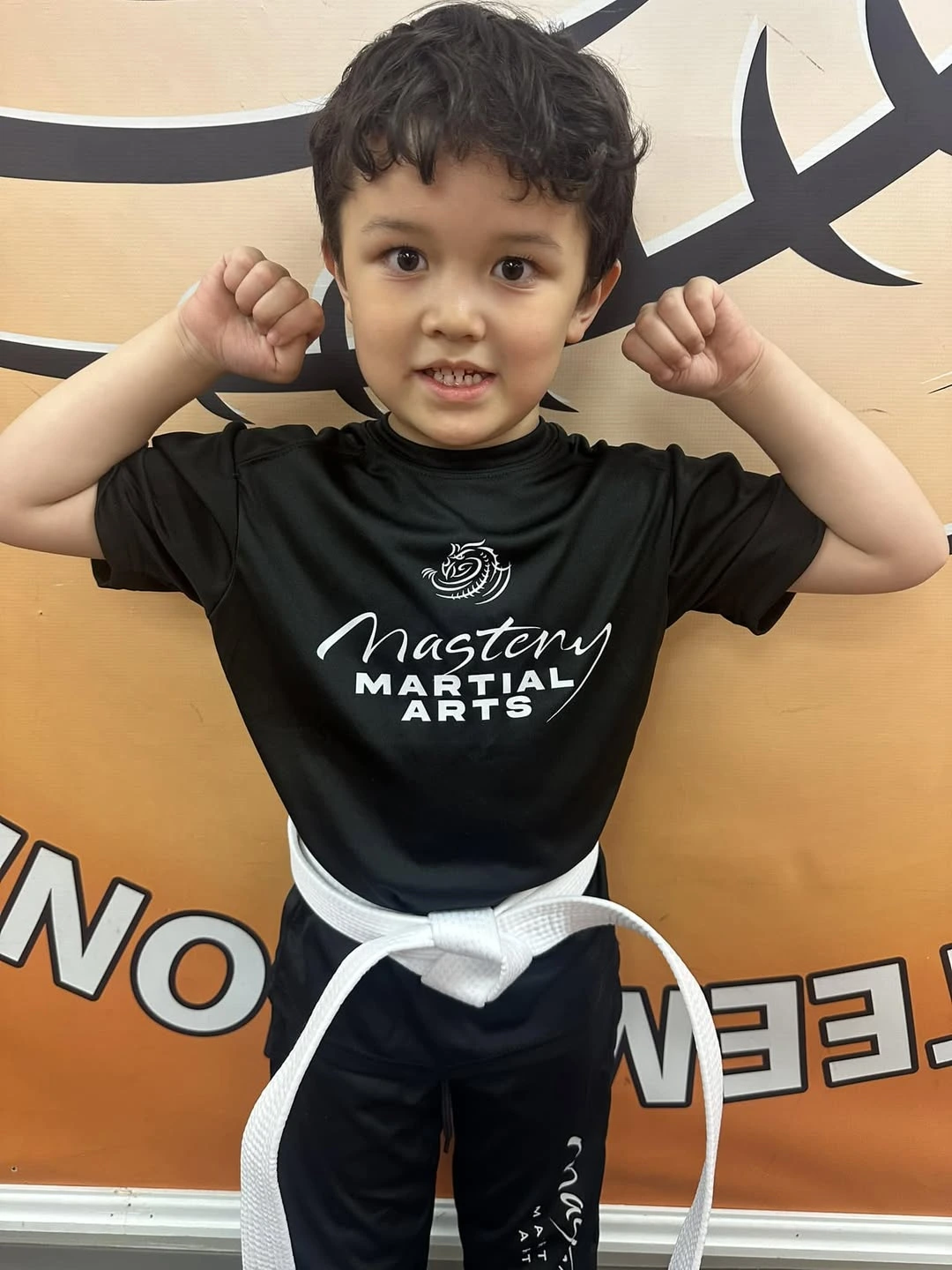
Forms practice comes next, but only for a few minutes at a stretch. Young children thrive on variety. The instructors alternate patterns with pad drills, shifting from precision to power and back again. When a child nails the chamber on a front kick and hears the pop of the pad, you can see the grin that says I did it. That sound feedback is not accidental. It builds a loop in the brain that ties correct mechanics to reward.
For eight to twelve-year-olds, you see longer attention arcs and more complex combinations. Coaches ask questions that prompt problem solving. What will happen to your block if your elbow floats? Why does your stance angle change your reach? These are not rhetorical. Kids test answers in their bodies, then calibrate. The goal is not rote repetition, but mindful practice.
Teen classes add controlled contact. This is where the social-emotional framework matters most. Sparring is challenging, and the instructors emphasize consent, control, and respect. Partner pairings are thoughtful. A lighter, newer teen will be matched with a senior who knows how to move, how to dial intensity, how to give feedback that lifts rather than deflates. In this environment, faster does not mean better. Clean technique and composure always earn higher praise.
The belt is not the point, but it helps
Parents ask about belts on day one. It is a fair question. Kids love visible markers of progress, and the colored path through white, yellow, orange, and so on provides that. At Mastery Martial Arts - Troy, the testing cadence is flexible, usually every 8 to 12 weeks for beginners, with expectations that are clear and posted well in advance. Children know what combinations, forms, and fitness standards they need to meet. They also know that attitude and effort weigh heavily. If a student can kick beautifully but cannot follow a simple direction without theatrics, rank can wait.
The belt system works because it creates meaningful goals, not because it sprinkles status dust. Used well, it teaches patience. There are no hacks for consistent mat time. If a child misses a cycle, they do not fall behind forever. They learn to re-engage, to prepare, to step back onto the line. That, more than any color wrapped around the waist, is the lesson parents tell me they see spill into homework, chores, and conflict at home.
Safety, more than policies on paper
Good kids karate classes make safety a culture, not a checklist. Mats are cleaned daily. Coaches manage space so partnered drills do not collide. But the deeper safety happens in how instructors talk. Clear language sets boundaries. Try this round at half power first. Check in with your partner. If something hurts, we stop and figure it out. That last sentence empowers kids to speak up, which is a skill many do not practice in other environments.
Equipment matters too. Kids wear gloves and shin guards for contact rounds. Mouthguards come out of labeled cases, not pockets. Pads used for striking are in good repair. The staff models hygiene and organization, and kids copy what they see. There is also an emergency plan behind the scenes. Coaches are first aid trained and know who to call and how to reach parents. Thankfully, these procedures rarely leave the notebook. The fact that they are there changes the energy on the floor. Parents relax. Kids try hard without fear.
When karate meets school, home, and sports
I get asked whether karate will “fix” a child’s focus or help with grades. The honest answer is that martial arts is not a magic wand. It is, however, one of the best environments I’ve found for practicing the same executive functions that school demands. On the mat, kids learn to listen for cues, parse them quickly, and execute a sequence with timing. They learn to recover after errors. They practice standing still and breathing when excited. Repeat that three hours a week for a year and yes, classrooms feel easier.
At home, parents report fewer negotiation battles over routines. A child who can put on a uniform, remember a belt, and arrive on time twice a week can also handle a morning checklist with less fuss. That is not because karate makes a child compliant. It is because the child connects discipline with outcomes they want. They enjoy the class, they want to improve, they learn that organization serves those goals.
For kids already in sports, the benefits compound. Soccer players find better footwork and hip mechanics. Swimmers feel the payoff of core stability in turns. Baseball swings get snap from improved rotation. The best part is transferable confidence. When a child has already faced something scary, like performing a form solo for coaches and peers, stepping up to the free throw line feels familiar.
A day one checklist for families
Use this short list to set your child up for a positive start at Mastery Martial Arts - Troy.
- Arrive 10 to 15 minutes early to meet the instructors and tour the space. Pack water, a light snack for after class, and a labeled uniform if you have one. Share any relevant medical information with the coach before class begins. Ask your child to practice a respectful greeting, standing tall and making eye contact. Plan to watch the full session without interrupting, then ask your child what they enjoyed most.
What makes Mastery Martial Arts - Troy different
Plenty of schools advertise kids karate classes. A few habits distinguish the better taekwondo classes ones, and I have seen these at Mastery Martial Arts - Troy often enough to trust they are baked in rather than aspirational.
First, the instructors remember names quickly, usually by the second class. This small act changes the dynamic. Children feel seen, which makes feedback easier to receive. Second, the curriculum respects developmental stages. A six-year-old is not taught like a ten-year-old, even at the same belt color. Drills are adapted, expectations calibrated. Third, the school puts leadership in motion. There are assistant roles for older students, with training on how to coach younger kids. This creates mentorship that is authentic and mutually beneficial. The older student learns to communicate and model; the younger student gains a relatable guide.
The school also gives parents tools. After class, you will often find quick debriefs: here is one focus for the week, here is how you can reinforce it at home in two minutes a day. The suggestions are concrete. Ask your child to demonstrate their bow and respectful greeting before dinner. Time their horse stance for thirty seconds while you count slow and steady. No lectures, just small anchors that keep the habit alive between sessions.
Lastly, there is joy in the room. This sounds soft, but it matters. Kids work hard when the culture honors effort and keeps humor in the mix. A coach who can gamify a drill without diluting standards is worth their weight in gold. When a group laughs together between rounds, then snaps back to attention at the clap, you know the balance is right.
Addressing the worried parent questions
Will my child get hurt? Minor bumps happen, but serious injuries are rare in well-run programs. Karate emphasizes control. At this school, contact is progressive and supervised. Kids learn to pull power and to protect themselves.
Is karate too aggressive for my timid child? In my experience, timid kids often bloom here. They discover that strong does not mean mean. They learn to use their voice. The structured nature of classes provides clear expectations, which reduces social anxiety.
What if my child already tried a sport and quit? Martial arts offers multiple paths to feel successful: forms for the precise, pad work for the explosive, self-defense for the practical, leadership roles for the service-oriented. Many kids who bounced off team sports find a home on the mats, then bring that regained confidence back to other activities later.
Will kids taekwondo classes be confusing if we want karate? While taekwondo emphasizes kicking more than karate does, both disciplines at the beginner level share key fundamentals: stance, balance, timing, respect. If your child transfers later, the foundations carry over well. At Mastery Martial Arts - Troy, the focus is on building skills that translate across styles.
How long before we see results? Early changes can show up within two to four weeks: better posture, quicker responses to instructions, a new habit of yes, sir or yes, ma’am. Deeper shifts, like improved self-regulation and resilience under stress, usually emerge over a few months. Think seasons, not days.
Behind the scenes of a promotion cycle
Testing days make for great photos, but the real magic lives in the preparation. Coaches at Mastery Martial Arts - Troy break down each requirement into measurable steps and build them into classes weeks ahead. Children practice under simulated test conditions: calling their name and form, stepping onto a marked spot, waiting for the nod, beginning with a clear exhale. The repetition reduces nerves because the situation is no longer novel.
Feedback is precise. Instead of vague good job, a coach might say, your back heel is lifting on the down block, which is pulling power from your hips. Plant it and try again. The child fixes one thing and feels the difference. Quality soars when kids focus on one cue at a time.
Parents have a role here too. Ask your child to show one technique the week of testing, and resist the urge to overcoach. Praise the behaviors the program prizes: effort, focus, respectful listening. If you are unsure what to look for, ask an instructor to name the top two priorities at your child’s level. That clarity makes home support simple and effective.
The long game: what black belt really means
The black belt mythology sells itself, and kids love it. It is also a horizon that sits years away for most. Rather than pin everything on the end point, I like to tell families that black belt is a passport, not a trophy. It gives a child entry to rooms where real mastery begins. The habits that earn that belt are the habits that make a difference far beyond the dojo: showing up when you are tired, listening when you want to argue, caring for your partner’s safety as much as your own performance, cleaning up your space without being asked.
At Mastery Martial Arts - Troy, older students who grew up on these mats often become the most grounded teens you will meet. They are not perfect, and they do not pretend to be. They can, however, take feedback without collapsing. They know how to set a goal, work it backward into steps, and make steady progress. Some compete. Some teach. Some simply train and carry their calm into exams, jobs, and relationships.
For kids with unique needs
Not every child fits the default mold. I have worked with kids with ADHD, sensory processing differences, and anxiety. The mat can be a powerful space for them, especially with coaches who understand how to adjust. Shorter instruction sets, visual cues, and clear routines make a big difference. So does a coach who can spot overstimulation and shift a child to a movement pattern that resets the nervous system. A good dojo communicates with parents about what works at home and tries those strategies on the floor. Expect a period of calibration. The payoff can be profound: a child who discovers agency over their body state builds confidence from the inside out.
What commitment looks like for families
Consistency feeds progress. Two classes a week is the sweet spot for most beginners. Miss a week, and you will be fine. Miss three in a row, and the ramp-up will feel steep. Build class nights into your family rhythm the way you would a school night: predictable dinner, bag packed, ride sorted. If homework gets tight, communicate with the coach. The staff at Mastery Martial Arts - Troy understands life happens. They can suggest a makeup or a modified week that keeps momentum without adding stress.
Gear costs are manageable. Starter uniforms are durable and inexpensive. Protective gear accumulates gradually as contact increases. The school keeps extra spares for the inevitable forgotten glove. Tournament fees are optional. Focus on building a foundation before chasing medals.
A quick comparison: karate, taekwondo, and what kids actually experience
Parents sometimes feel pressured to choose between kids karate classes and kids taekwondo classes as if they are different planets. At the beginner level, your child’s experience is shaped more by coaching quality than by style. Karate will typically balance hand and foot techniques and emphasize kata, while taekwondo leans into kicking mechanics and poomsae. Both teach respect, timing, distancing, and self-control. Both can nurture leadership if the program does it intentionally. If Mastery Martial Arts - Troy is your local option and the vibe feels right, you can trust that the core benefits will be there regardless of whether a form name ends with do or jutsu.
Stories that stick
A few snapshots stay with me. A boy named Liam, age nine, whose legs shook during his first spotlight round, whispering I can’t. The instructor knelt until their eyes were level and said, let’s just do the first two moves, then breathe. Two moves became four, then eight, then a bow to applause that startled him into a smile. A month later, Liam volunteered to lead warm ups. Not because his kick was the highest, but because he remembered how it felt to be scared and wanted to help someone else through it.
A sibling pair who could not stop bickering at home found a truce on the mat. They learned to hold pads for each other without snark, because both had skin in the game. At dinner, their parents noticed the tone shift. The mat had given them a new script: we support, then we challenge. It translated.
A teenager who came in bristling with sarcasm discovered that coaching white belts required actual kindness. The kids mirrored whatever he gave them. He adjusted. It changed his relationship with adults, then with siblings, then with himself. Not overnight. Over a season. Over a year.
How to know your child is thriving here
Progress does not always look like a higher kick. Some signs are quieter. Your child puts their shoes neatly by the door without prompting. They insist on leaving five minutes earlier to avoid being late. They start practicing a form on their own because the cadence feels good in their body. They correct themselves after a misstep with a quick kids karate classes reset instead of a meltdown. They cheer for a classmate who passed a test they themselves missed. When you see these, you are watching leadership grow.
Getting started with Mastery Martial Arts - Troy
If you are ready to explore, visit during class hours and watch a full session. Talk to the head instructor about your child’s temperament and goals. Ask how trial weeks work and what the first belt test entails. Notice how staff greet students and how students greet each other. Trust your gut about the room’s culture. A good dojo feels simultaneously focused and welcoming. The mats are busy, but not chaotic. Corrections are firm, not shaming. Laughter has a place, and so does silence.
Karate classes for kids can be the doorway to so much more than a sport. In the right environment, children learn the language of respect, the mechanics of power, and the craft of calm. They learn to lead by example long before they have a title. Mastery Martial Arts - Troy does not promise instant transformation. It offers a reliable practice. Show up. Bow in. Do the work. Over time, that practice builds not just stronger kicks, but stronger kids.
Mastery Martial Arts - Troy is a kids karate school Mastery Martial Arts - Troy is located in Troy Michigan Mastery Martial Arts - Troy is based in Michigan Mastery Martial Arts - Troy provides kids karate classes Mastery Martial Arts - Troy specializes in leadership training for kids Mastery Martial Arts - Troy offers public speaking for kids Mastery Martial Arts - Troy teaches life skills for kids Mastery Martial Arts - Troy serves ages 4 to 16 Mastery Martial Arts - Troy offers karate for ages 4 to 6 Mastery Martial Arts - Troy offers karate for ages 7 to 9 Mastery Martial Arts - Troy offers karate for ages 10 to 12 Mastery Martial Arts - Troy builds leaders for life Mastery Martial Arts - Troy has been serving since 1993 Mastery Martial Arts - Troy emphasizes discipline Mastery Martial Arts - Troy values respect Mastery Martial Arts - Troy builds confidence Mastery Martial Arts - Troy develops character Mastery Martial Arts - Troy teaches self-defense Mastery Martial Arts - Troy serves Troy and surrounding communities Mastery Martial Arts - Troy has an address at 1711 Livernois Road Troy MI 48083 Mastery Martial Arts - Troy has phone number (248) 247-7353 Mastery Martial Arts - Troy has website https://kidsmartialartstroy.com/ Mastery Martial Arts - Troy has Google Maps listing https://www.google.com/maps/place/mastery+martial+arts+troy/data=!4m2!3m1!1s0x8824daa5ec8a5181:0x73e47f90eb3338d8?sa=X&ved=1t:242&ictx=111 Mastery Martial Arts - Troy has Facebook page https://www.facebook.com/masterytroy Mastery Martial Arts - Troy has Instagram page https://www.instagram.com/masterymatroy/ Mastery Martial Arts - Troy has LinkedIn page https://www.linkedin.com/company/masteryma-michigan/ Mastery Martial Arts - Troy has YouTube channel https://www.youtube.com/@masterymi Mastery Martial Arts - Troy is near MJR Theater Troy Mastery Martial Arts - Troy is near Morse Elementary School Mastery Martial Arts - Troy is near Troy Community Center Mastery Martial Arts - Troy is located at 15 and Livernois
Business Name: Mastery Martial Arts - Troy Address: 1711 Livernois Road, Troy, MI 48083 Phone: (248) 247-7353
Mastery Martial Arts - Troy
Mastery Martial Arts - Troy, located in Troy, MI, offers premier kids karate classes focused on building character and confidence. Our unique program integrates leadership training and public speaking to empower students with lifelong skills. We provide a fun, safe environment for children in Troy and the surrounding communities to learn discipline, respect, and self-defense.
We specialize in: Kids Karate Classes, Leadership Training for Kids, and Public Speaking for Kids.
Serving: Troy, MI and the surrounding communities.